
Car Locksmith 24 Hour

You're stood outside the car right now, aren't you, one hand in a pocket that's already been checked three times, the other on a phone that's about to become your lifeline. Maybe it's a terraced street in Cardiff, a layby near Newport, or a van idling on the edge of Swansea while the last delivery of the night waits in the back. When a key disappears, a fob dies, or a lockout turns suspicious, the right car locksmith 24 hour response isn't just about getting back in, it's about deciding what happened, what still works, and what needs securing before the vehicle goes anywhere.
The 11pm Call That Starts Every Emergency Lockout
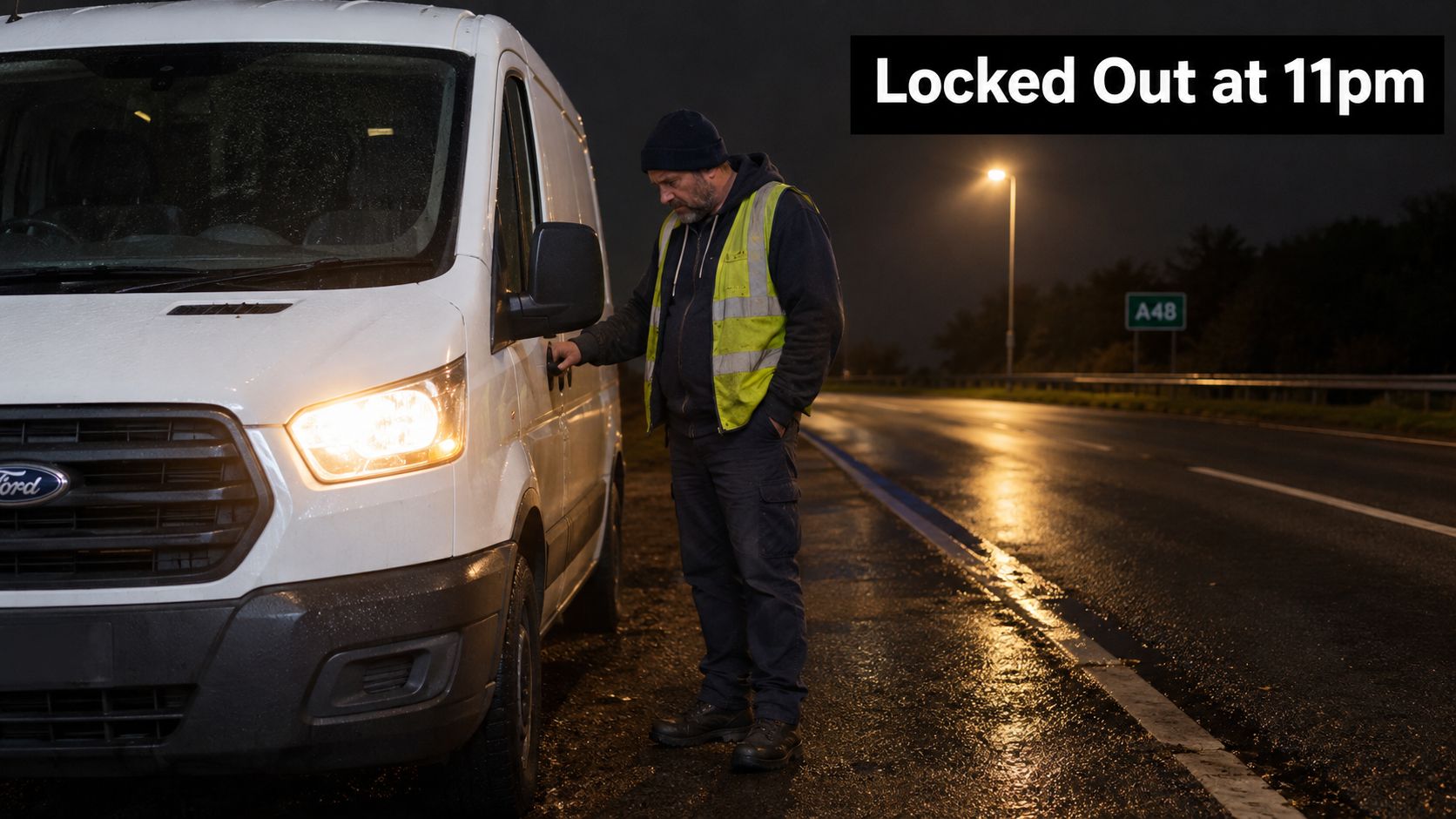
A parent in the Valleys is standing under a porch light, coat half on, child asleep inside, and the front door key is useless because the car key is gone as well. A delivery driver on the A48 has shut the van, heard the click, and watched the keys sit on the seat through tinted glass. That's the moment car owners realise a 24-hour automotive locksmith is a different trade from a daytime high-street key cutter.
A shop counter can copy a simple key during opening hours, but late-night vehicle work is about access, electronics, and judgment. Vehicle theft is a real UK-wide pressure, with Home Office data for England and Wales recording 104,678 reported vehicle thefts between July 2022 and June 2023, and only 2,215 individuals arrested and charged, a 2.12% charge rate (RAC summary of Home Office data). That's why a lockout, a stolen fob, or a suspected relay attack can't be treated like a simple lost-house-key call.
Practical rule: if the vehicle has a modern fob or keyless system, the first job is triage, not brute force.
South Wales drivers feel that difference most at awkward hours, when the vehicle is parked on a street, outside a terrace, or in a supermarket car park far from help. A proper mobile automotive locksmith turns up prepared to enter the vehicle without damage, assess whether the key is lost or compromised, and deal with the electronics as well as the lock. That's the reason this topic matters at 11pm, not just at 11am.
Your First Ten Minutes After the Key Disaster
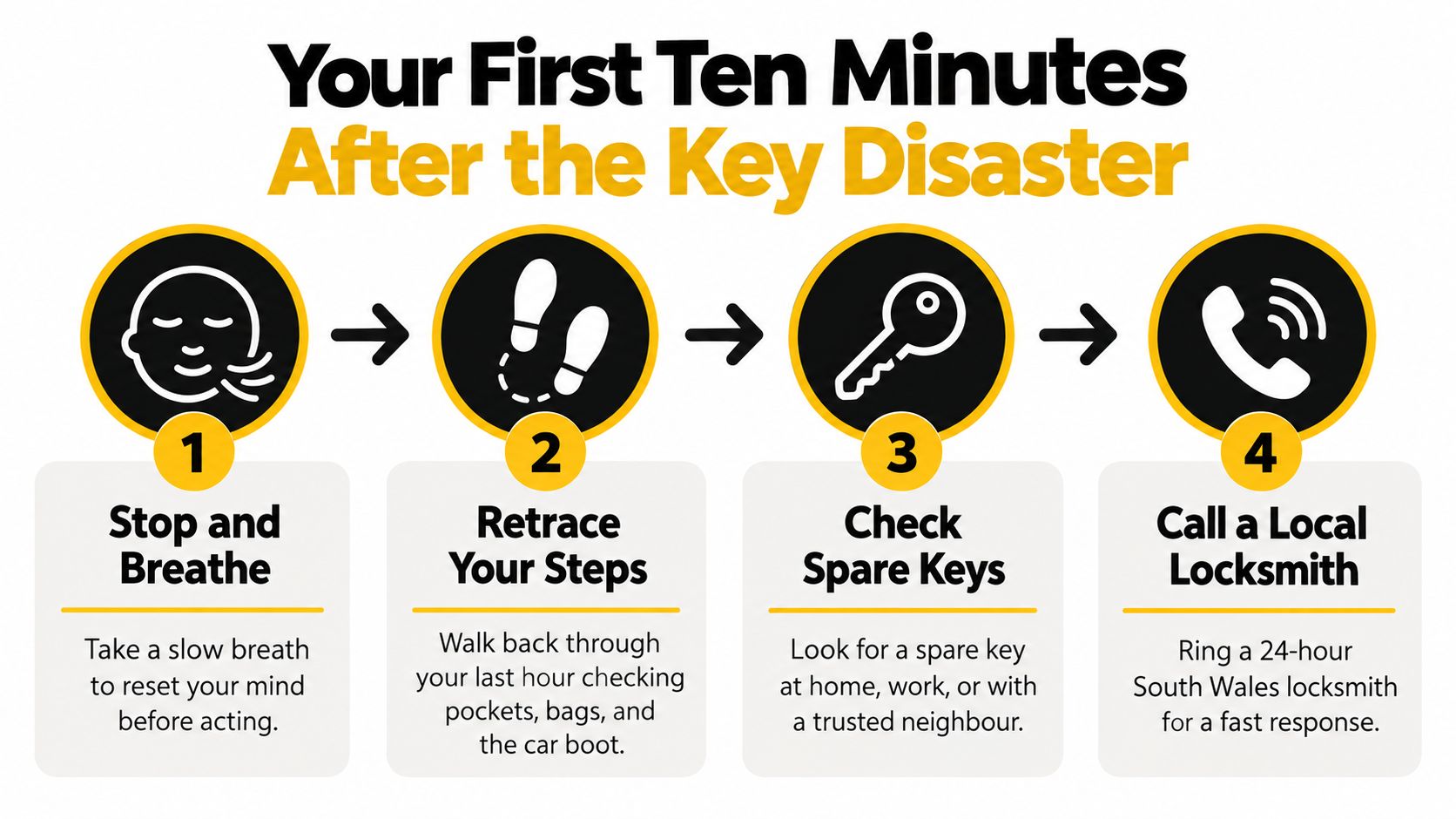
The first move is simple, stop and reset your head. Panic makes people retrace the same pocket, the same boot, and the same kitchen counter without changing anything, which wastes time and clouds the story you need to give the locksmith.
Sort the problem before you ring
Work out which of these you're dealing with. A lost key is different from a key locked inside, a snapped blade, a dead fob battery, or a key that may have been stolen. If there's any chance the vehicle's security has been compromised, that changes the response completely.
Check the obvious places first. Look in the ignition, cup holder, boot, coat pocket, and bag, then check whether a spare key exists at home, work, or with someone you trust.
Keep the search disciplined. Retrace the last hour once, not ten times.
Make the location safe. If you're on a busy road, move yourself first, not the car.
Get the vehicle details ready. Registration, make, model, year, key type, and exact location are the basics a dispatcher needs before sending help.
A good South Wales dispatcher will also ask whether the vehicle is on private land or a public road, because access and safety affect how the job is handled. For a van on a cul-de-sac, a hybrid parked at a retail park, or a hatchback outside a flat, that detail matters as much as the registration. If you can also say whether the key is standard metal, remote fob, transponder, or keyless, you've already saved time.
Short version: clear information gets you a faster arrival and a cleaner job.
If you're unsure whether it's a simple lockout or a security problem, say so plainly. That honesty helps the locksmith choose the right approach before the van even leaves the yard.
What a Genuine 24 Hour Car Locksmith Actually Does at the Kerb
A competent mobile locksmith starts by checking that the call is legitimate. Expect identity checks, confirmation of vehicle ownership or authorised use, and a quick set of questions about registration, make, model, year, and the exact fault. A technician who skips that stage is cutting corners before touching the car.
Non-destructive entry comes first
The right person aims to open the vehicle without harming door seals, cylinders, or trim. That means proper vehicle entry tools, patience, and an understanding of how the lock and bodywork interact. Drilling by default is a red flag, not a solution.
After entry, the job can move into the electronic side. On many vehicles, the work is not opening the door, it's key cutting from code, transponder programming, or remote-fob setup with manufacturer-compatible diagnostics. That matters because a copied blade alone doesn't make a modern vehicle road-ready.
A finished job should leave the doors working, the boot opening, the ignition authorising, and the emergency blade functioning.
Before the technician leaves, the checks should be physical as well as electronic. Door locking, boot release, ignition authorisation, and warning-light behaviour should all be verified on the spot. If a keyless or immobiliser system is involved, the vehicle should be tested again after programming so there are no hidden faults waiting for you later.
For a quick sense of what a vetted mobile operator should be able to explain before arrival, see this certified technician guide. A credible operator should also be comfortable talking about insurance, diagnostics capability, and the method they'll use on your specific vehicle.
Red flags are easy to spot once you know them. Refusal to show ID, no invoice, cash-only pressure, and vague talk about “sorting it on site” are all warning signs. A real professional can tell you what they'll do, how they'll do it, and what happens if the vehicle needs a replacement key rather than simple entry.
Realistic Costs and How to Spot a Quoting Scam
A fair emergency quote usually has separate parts. There's the call-out, the labour, the blank key or fob, the chip or programming work, and sometimes an after-hours premium. That breakdown is what separates an honest late-night job from a number plucked out of the air.
Compare the quote, not just the headline price
A vague “we'll see when we get there” price is a common way rogue operators trap stranded motorists. A proper South Wales locksmith should be able to give you a written estimate, explain what changes the cost, and confirm whether the price covers entry only or a full replacement and programming job. If the price suddenly jumps once the door is open, you're already dealing with the wrong outfit.
Job type | Typical price band | What affects the cost |
|---|---|---|
Entry only | Varies by vehicle and access conditions | Lock type, weather, parking position, and whether the vehicle is high security |
Key replacement | Varies by key style and vehicle | Mechanical blade, transponder chip, key code availability, and whether the original key is lost or just locked inside |
Full fob programming | Varies by system complexity | Remote function, immobiliser pairing, manufacturer diagnostics, and whether all missing keys must be disabled |
Those bands stay deliberately broad because the vehicle, the location, and the security system matter more than a one-line promise. What you want is not the cheapest number, it's a quote that matches the work being done. Transparent operators usually publish pricing structure and warranty terms upfront, and they'll still put the agreed job on a written sheet before starting.
If you want a fuller breakdown of how proper pricing should be explained, see this auto locksmith cost guide. A hidden surcharge is one thing, but a technician who won't say what's included is a much bigger problem.
Practical rule: if the quote won't survive being read back aloud, don't accept it.
The same logic applies whether you're dealing with a family car, a van, or a hybrid. Good pricing should match the vehicle's actual job, not your stress level.
When the Lockout Is Actually a Suspected Keyless Attack
A relay attack is simple in concept and nasty in practice. Someone captures the signal from a fob near a house or doorway, tricks the vehicle into believing the key is nearby, then opens and starts it. Police guidance warns that this can happen with keyless vehicles, so a lockout that feels “odd” deserves a different response from an ordinary lost-key call (police vehicle theft guidance).
Treat suspicion as evidence, not inconvenience
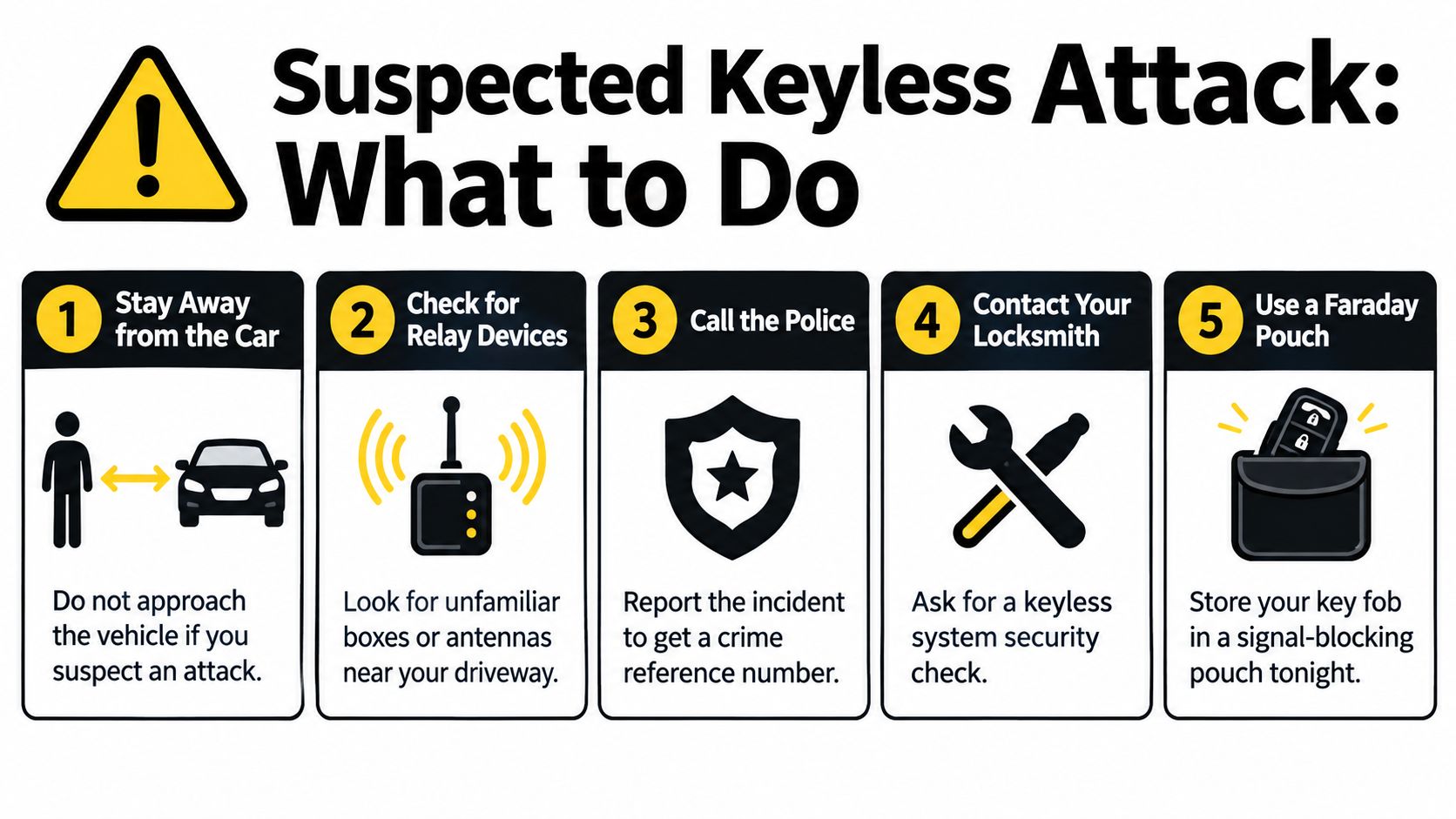
If theft is suspected, move away from the vehicle and don't keep testing the fob. Contact the police, preserve CCTV or dashcam footage, notify the insurer, and ask whether all existing keys should be erased from the vehicle's authorised list. That last point matters because replacing a single key doesn't always close the security gap.
This is not a rare edge case. Hampshire and Isle of Wight Police reported about 480 keyless-car-theft incidents in 2022/23 compared with about 135 in 2021/22, roughly a 256% increase (Hampshire Police). That doesn't mean every lockout is a theft, but it does mean South Wales motorists shouldn't assume every fob problem is innocent.
A security-first locksmith should document the key count before and after service, confirm which keys remain authorised, and get customer sign-off on that list. If a key may be stolen or cloned, the right move is to treat the vehicle as a security case first and a replacement job second.
If you need a clearer prevention checklist, the police guidance is worth reading alongside the incident report at this keyless theft advice page. The point is simple, if the incident looks suspicious, preserve the evidence before anyone programs a fresh fob.
Layering on a Scorpion Ghost Immobiliser and Tracker
Once the immediate problem is fixed, the conversation should shift to layered protection. South Wales Police recommends physical security, immobilisers, and tracking rather than relying on a single device, because no one layer covers every theft method (South Wales Police guidance).
Where the upgrades fit
A Scorpion Ghost immobiliser sits alongside the factory immobiliser, it doesn't replace it. Its job is to block unauthorised starting, which is especially useful after a key has been lost, stolen, or exposed to a suspected relay attack. That makes it a sensible post-incident upgrade for motorists who want the vehicle harder to start even if someone has access to a working fob.
A tracker is the other half of the conversation. UK-rated systems can be Thatcham S7, which is a post-theft recovery system, or Thatcham S5, which adds stronger monitored functionality and Automatic Driver Recognition through a driver tag (tracker category explanation). In plain terms, that means some systems can recognise movement without the authorised tag and alert a monitoring centre sooner.
Security layer | What it adds | Best fit |
|---|---|---|
Immobiliser | Blocks unauthorised starting | Drivers worried about cloned keys or relay theft |
Tracker | Helps locate and recover the vehicle | Owners, fleets, and insurers that want recovery support |
Physical locks | Visible deterrence | Cars and vans parked on street or driveways |
The practical decision is usually about risk and downtime. If the vehicle is already on site for a replacement key, fitting a Ghost immobiliser or tracker at the same visit can reduce repeat disruption and keep the paperwork together. Keep the certificate, installation notes, and any codes or tag details in one place for insurance records and future handover.
One option in South Wales is Blade Auto Keys, which now fits Scorpion Ghost immobilisers and vehicle trackers as part of its mobile automotive service. The key point isn't the brand name, it's that the security upgrade belongs in the same conversation as the emergency call-out, not months later after another scare.
Your Pre-Incident Locksmith Routine
Save one vetted 24-hour locksmith number in your phone before you need it. Keep a secure photo folder with the registration, V5 details, and both sides of any spare key record, then practise saying your car's make, model, year, and exact parking spot out loud so it's easy under pressure.
This spare key holder guide is useful because the cheapest lockout is the one that never happens. A spare held badly is nearly as useless as no spare at all, especially if nobody in the house knows where it is.
Before you agree to any work, ask four things straight away. Who are you, what insurance do you carry, what's the written quote, and which diagnostic tools will you use on my vehicle? If the answers are vague, walk away.
The worst part of a lockout is the uncertainty before help arrives. A five-minute routine tonight turns tomorrow's emergency into a short, controlled job instead of a panic call at the kerb.
If you need a South Wales automotive locksmith who can handle emergency entry, key programming, and post-incident security upgrades in one mobile visit, Blade Auto Keys can help. Visit Blade Auto Keys to arrange support for a lockout, replacement key, Scorpion Ghost immobiliser fitting, or tracker installation.
Comments