
What Is a Ghost Immobiliser and How It Protects

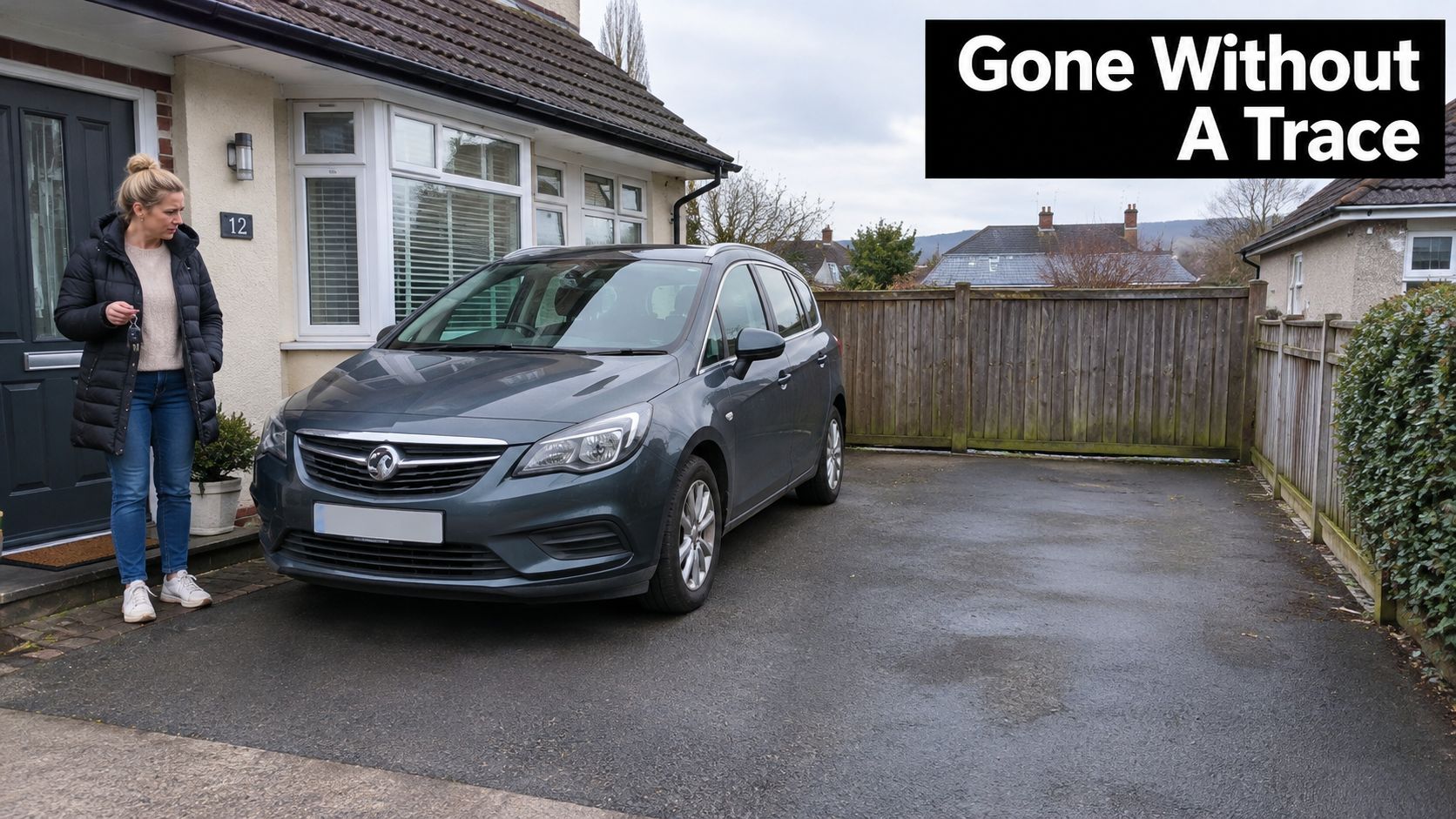
You lock the front door in Cardiff, place the keyless fob on the hallway table and go to bed. In the morning, the car may be gone without broken glass, forced locks or an obvious alarm. That quiet scenario is why many South Wales motorists are asking, what is a ghost immobiliser, and whether it offers more protection than the factory system already fitted to their vehicle.
A ghost immobiliser adds a hidden authorisation step before the engine can start. It isn't a replacement for the manufacturer immobiliser, physical security, careful key management, tracking or insurance requirements. Instead, it gives your car another checkpoint, much like a second lock on a door.
When Your Car Key Alone Is No Longer Enough
A driver in Swansea may park on a driveway after a late shift, lock the car with the keyless fob and assume the vehicle is secure. A thief doesn't necessarily need to smash a window. If criminals capture or relay the fob's signal, the vehicle may recognise what appears to be a valid key. The owner wakes to an empty space and little physical evidence of entry.
That doesn't mean every keyless car will be stolen, or that a ghost immobiliser guarantees protection. It does explain why factory security and key management deserve a closer look. The Office for National Statistics publishes police-recorded vehicle offences from the year ending March 2003, while Crime Survey for England and Wales estimates reach back to the year ending December 1981. ONS also says its survey only began asking about keyless cars in April 2017, so older and newer theft patterns can't be compared consistently within its published vehicle-theft information.
The extra checkpoint
A ghost immobiliser is an electronic, vehicle-specific anti-theft device designed to prevent an engine from starting unless the driver enters a concealed authorisation sequence, usually through existing vehicle buttons or controls. Unlike a conventional immobiliser that relies mainly on a coded key or transponder, it adds a separate authentication layer and normally doesn't need a visible aftermarket keypad or steering-lock device.
In practical terms, a stolen or cloned key may open the vehicle and satisfy the factory system, but it may not satisfy the additional PIN. The car can remain physically intact while the engine-start authorisation is withheld.
South Wales motorists can also reduce risk by storing keyless fobs away from doors and windows, checking how their vehicle's keyless functions operate and considering advice on preventing keyless car theft. A ghost immobiliser belongs in that wider routine. It shouldn't be presented as a magic box that makes a Cardiff, Swansea, Newport or valleys vehicle impossible to steal.
Practical rule: Treat a ghost immobiliser as an extra start barrier. Keep the factory key, locks, tracking arrangements and insurance conditions in place.
How a Ghost Immobiliser Actually Works
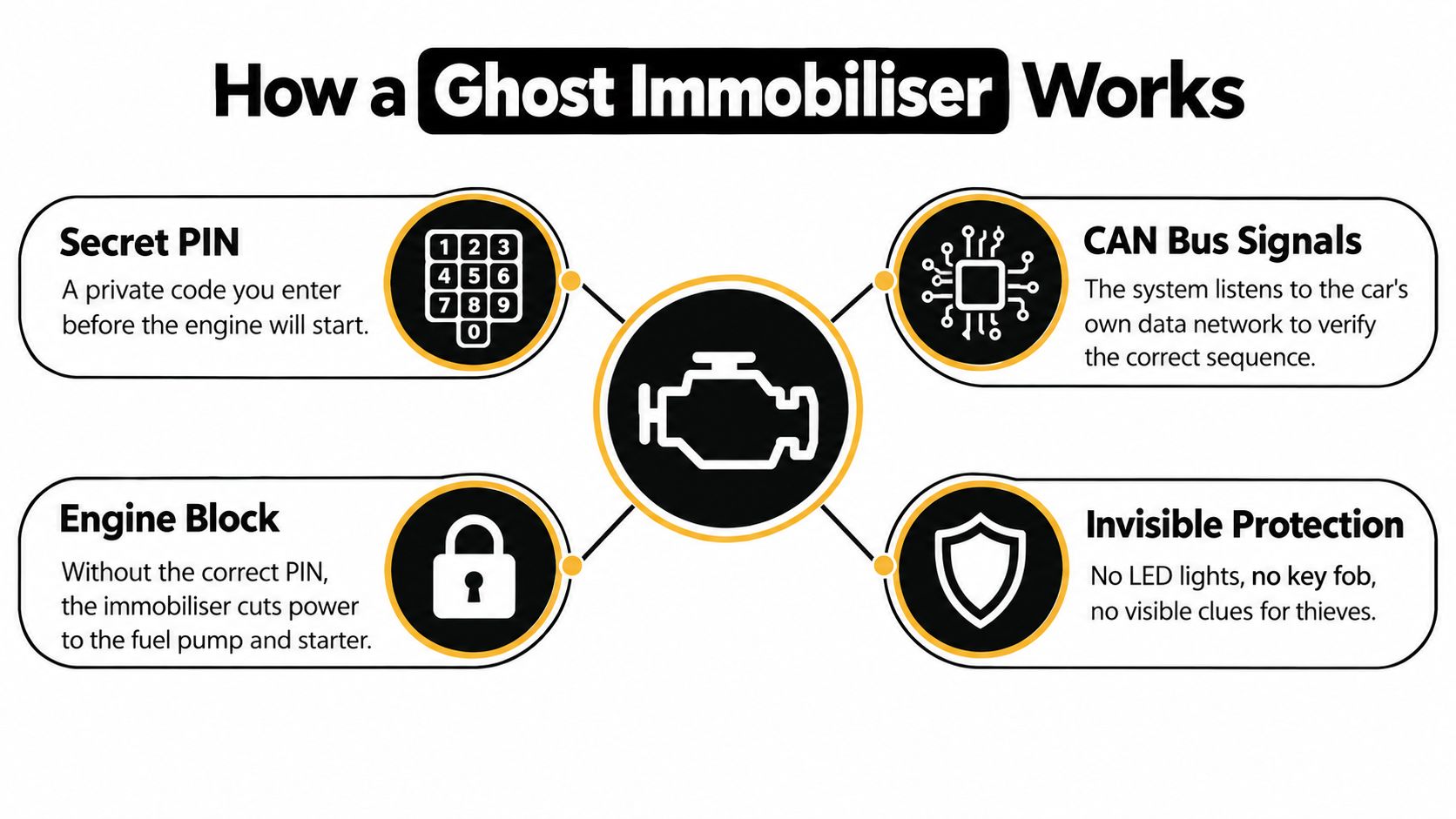
Think of the system as a house with two locks. Your normal key opens the first lock. The ghost immobiliser asks for a private button sequence before the vehicle is allowed to complete the starting process.
The sequence normally uses controls already fitted inside the car. Depending on the installation, those may include steering-wheel, dashboard or centre-console buttons. You enter the code, the system checks it, and the vehicle is authorised to start as usual.
From button press to engine authorisation
Many ghost systems communicate with the vehicle's Controller Area Network, usually called the CAN network. This is the internal data network that lets electronic control units exchange information. The installed immobiliser uses that vehicle communication environment to withhold selected start or drive-authorisation commands until the correct sequence has been entered.
The result is different from an alarm. An alarm primarily detects or signals an intrusion. An immobiliser is intended to prevent the vehicle from being driven away. Thatcham's classifications identify electronic immobilisers as Category 2 devices and combined alarm-and-immobiliser systems as Category 1, so the exact certification of the installed product should be checked rather than assumed from the word “ghost” in the relevant Thatcham material.
For the ScorpionTrack S7 specification, the system uses the vehicle's CAN data network to communicate with the ECU and produces no transmitted radio-frequency signal. That helps explain the covert design. There isn't normally a separate radio fob, bright indicator or obvious keypad for a thief to identify and remove.
Why the key may not be enough
A conventional key or keyless fob proves one thing to the factory system: the vehicle has detected an accepted credential. A PIN immobiliser asks a separate question: has the authorised driver entered the correct personal sequence?
That distinction matters if someone obtains, clones or relays a key signal. The added authentication step means the vehicle may still refuse to authorise starting. The code can also be changed on supported systems, which is useful if a former driver, contractor or other person should no longer know it.
Buyers who want a broader explanation of what happens after a website or service goes live may also find what happens after your site launches useful as a general process resource. For the vehicle itself, the important point is simpler: the installer integrates the security device with the car's own controls and start logic.
Everyday Driving With PIN Valet and Emergency Modes
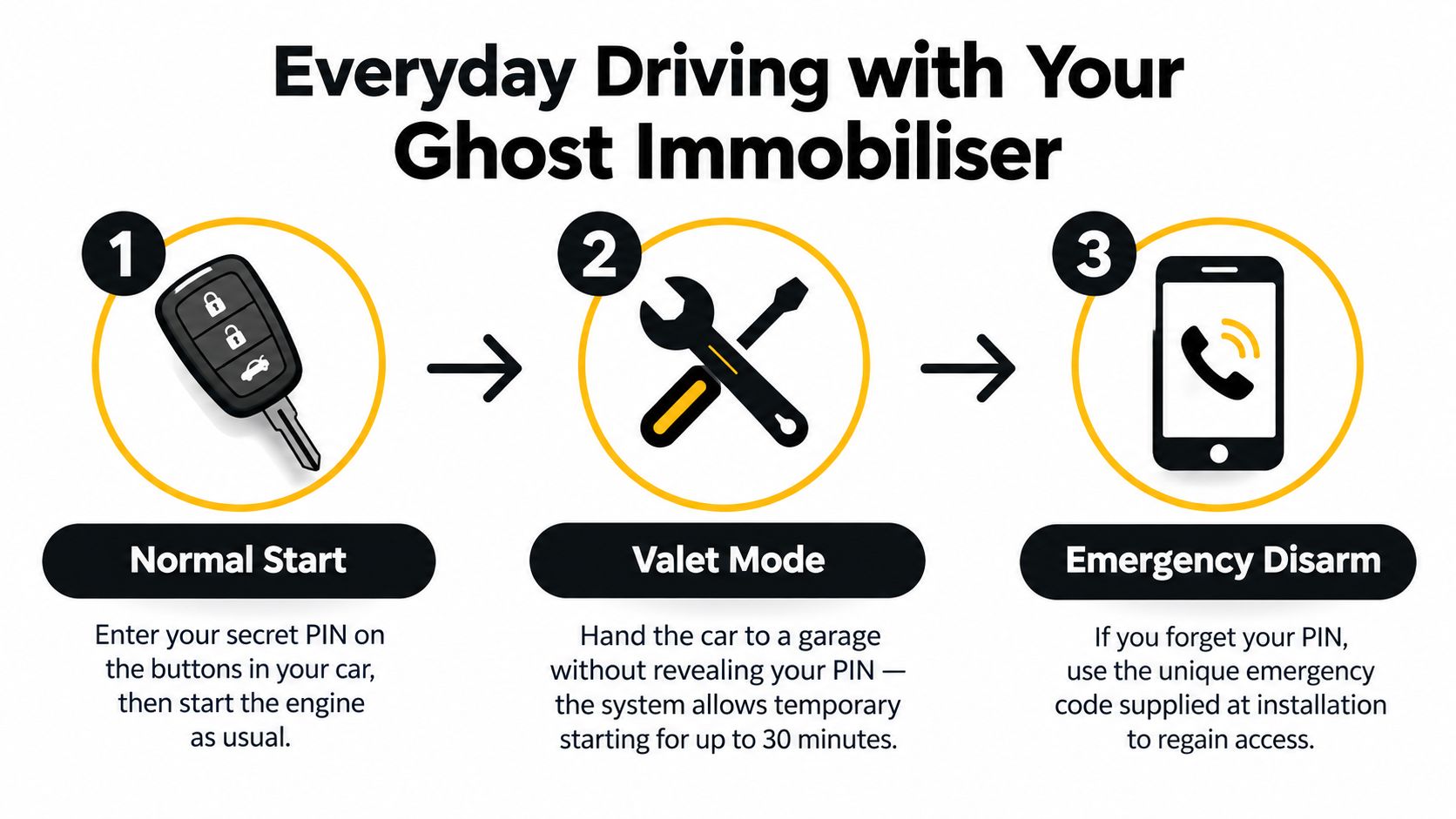
A security system has to work on an ordinary school run, not just in a theft scenario. Once fitted, the normal routine is usually straightforward: enter the personal sequence through the agreed buttons, then start the vehicle with the key or normal ignition control.
Drivers should choose a sequence they can remember without making it obvious to someone watching. Don't write the PIN on a card kept inside the car, and don't share it casually with every person who borrows the vehicle. If several people use a fleet van, the manager should establish a secure handover process and confirm who is authorised to know the code.
Valet mode for servicing
A garage in Newport or Swansea may need to move the vehicle, run diagnostics or carry out a service. A valet or service mode can allow temporary use without handing over the owner's private sequence. The exact activation process and duration depend on the fitted product and configuration, so the installer should demonstrate it rather than leave the driver to guess.
The ScorpionTrack S7 specification identifies service or valet mode and an emergency code alongside its CAN integration and changeable disarm sequence in its product information. Those features address a common worry: adding a PIN shouldn't mean refusing every workshop or valet request.
If you forget the code
People forget routines, especially after a battery issue, a change of vehicle or a long period when another driver has used the car. An emergency code should be supplied and explained at handover. Keep its instructions securely outside the vehicle, with access limited to the owner or responsible fleet manager.
Ask the installer to record these details:
Normal start: Which buttons accept the PIN, and what confirms that authorisation has succeeded?
PIN change: Can you change the sequence, and what procedure should you follow?
Valet mode: How is it enabled, how is it ended and what limitations apply?
Emergency access: Where should the emergency code be stored, and who can use it?
Support: Who should you contact if the vehicle doesn't start after a battery replacement or diagnostic visit?
This short video can help motorists visualise the general operating idea before discussing the exact configuration with a fitter.
For background on how stolen or copied keys can be used against vehicles, see proximity key-fob cloning. The practical answer isn't panic. It's knowing how your own car's authorisation routine works and keeping the emergency procedure available.
Ghost Immobiliser Compared With Alarms and Trackers
Different security devices solve different problems. A factory immobiliser is part of the vehicle's original security architecture. A ghost immobiliser adds a concealed driver-authentication step. An alarm draws attention to intrusion, while a tracker can help locate a vehicle after unauthorised movement.
The most important distinction is between prevention and recovery. A ghost immobiliser is designed to make drive-away theft harder. It doesn't necessarily stop a vehicle being towed or winched onto a transporter. A tracker may assist recovery, but it doesn't prevent the theft by itself.
Security layer | Stops drive-away | Helps recovery |
|---|---|---|
Factory immobiliser | Provides the manufacturer's original engine-authorisation control | No, not as its core function |
Ghost immobiliser | Adds a concealed PIN authorisation barrier | No, it doesn't locate a removed vehicle |
Alarm | Signals intrusion and may deter some attempts | No, not unless paired with another service |
Monitored tracker | Not as its primary function | Yes, movement alerts and location data can support recovery |
Physical deterrent | May slow or discourage an attempt | No, it doesn't provide vehicle location |
Understanding the classifications
Thatcham separately identifies electronic immobilisers as Category 2 and combined alarm-and-immobiliser systems as Category 1. That classification doesn't mean every product described informally as a ghost immobiliser has the same certification. Ask for the exact product and installation documentation.
The Association of British Insurers says an immobiliser can add another security layer but doesn't guarantee theft prevention. An insurer may require an approved product, professional installation or evidence of certification before applying any policy benefit. Check directly with the insurer before fitting and provide the precise product details afterwards.
Drivers comparing audible protection can find out if car alarms work, but the answer should be applied to the vehicle's risk rather than treated as a choice between one “winner” and everything else. A car can have an alarm and still benefit from a separate engine-start barrier.
For a wider UK-focused overview of vehicle-security options, see the UK's best car security systems guide. South Wales owners and fleet managers should choose the combination that matches where vehicles are parked, who drives them and how quickly a stolen vehicle needs to be located.
Compatibility Installation and Warranty Checks in South Wales
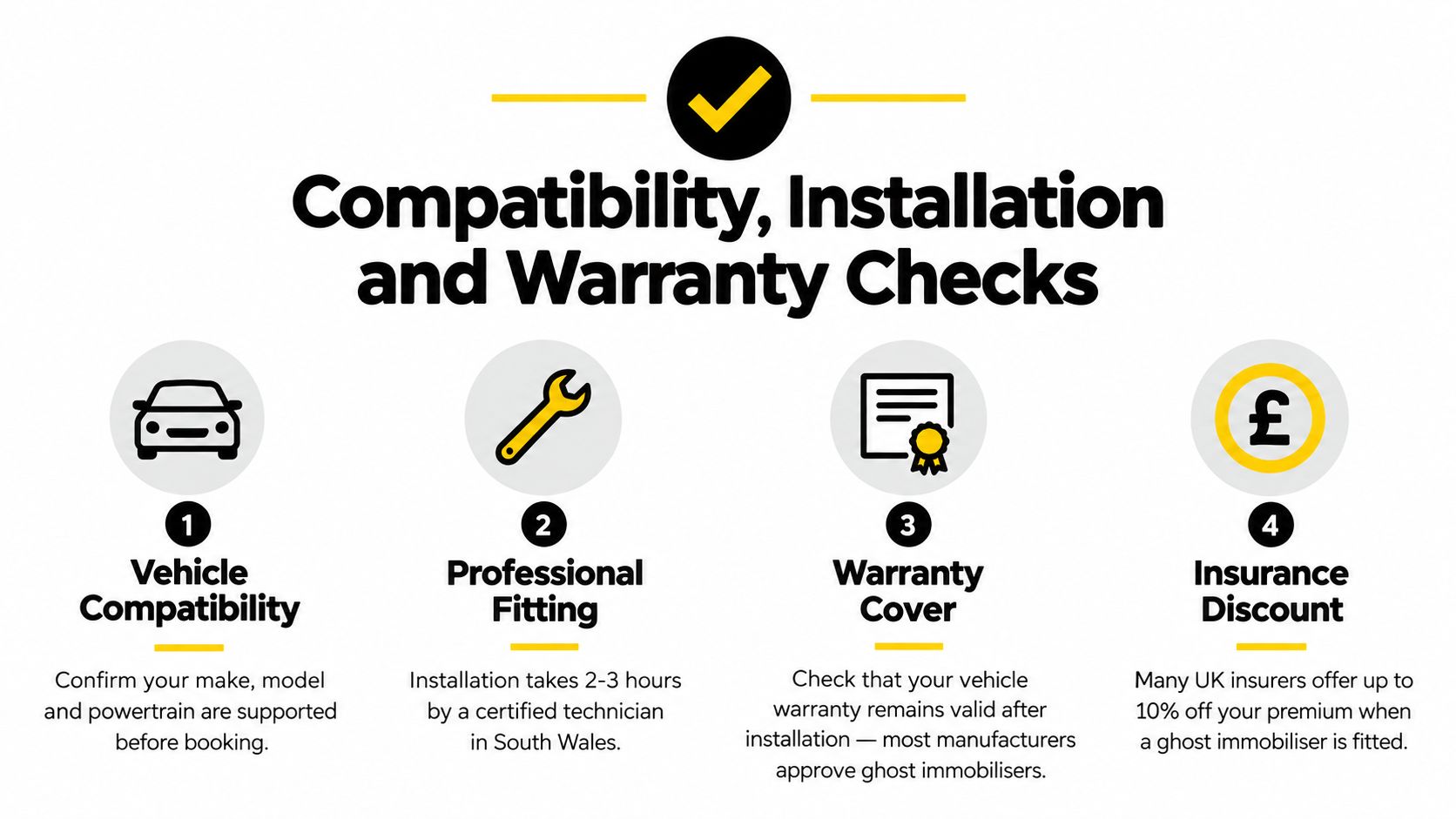
A ghost immobiliser isn't a universal plug-in accessory. The correct installation depends on the vehicle's make, model, model year, powertrain, control modules, ignition architecture and authorised-start logic.
Two vehicles that look similar from the outside may exchange different CAN messages or use different electronic modules. A wiring mistake or poor configuration can cause starting faults, diagnostic trouble codes or unintended loss of essential vehicle functions. That is why professional, vehicle-specific fitting matters for cars, vans, hybrids and electric vehicles alike.
Ask these questions before booking
Start with the exact vehicle details, not only the badge. Give the installer the registration or VIN where appropriate, model year, engine or powertrain information and any existing aftermarket equipment. A competent fitter should confirm compatibility before taking the booking.
Use this checklist during the conversation:
Product identity: Which Scorpion system is proposed, and what documentation will you receive?
Vehicle compatibility: Has the exact make, model, year and powertrain been checked?
Installation method: Which functions will be immobilised, and how will the fitting avoid safety-critical systems?
Post-fit testing: Will normal starting, locking, diagnostics and battery behaviour be checked?
Emergency procedure: Will you receive the emergency code and written instructions?
Warranty position: Should you speak to the vehicle manufacturer, dealer or lease provider first?
Insurance conditions: Does your insurer require a specific approval, certificate or installer status?
Handover is part of the installation
A good handover should cover normal PIN entry, changing the sequence where supported, valet mode, emergency disarming and what to do after a battery disconnect. The installer should document the immobilisation method and confirm that the vehicle behaves normally before returning it.
Warranty and insurance decisions belong to the relevant manufacturer, dealer and insurer. Don't rely on a general statement that every manufacturer or insurer will accept an aftermarket system. Get the answer for your vehicle and policy in writing if the decision affects a lease, fleet contract or claim.
Why Layered Security Matters for South Wales Drivers
South Wales motorists face a practical security problem, not an abstract technology debate. Wales-wide vehicle-crime data records 3,595 cases, of which 2,885 were concluded, and 82% had no suspect identified in the published Wales crime dataset. Those figures aren't a precise South Wales total, but they support a sensible response from drivers in Cardiff, Swansea, Newport and the Welsh valleys: use more than one protective measure.
The location and circumstances of theft also matter. In ONS vehicle-theft data for the year ending March 2020, manipulating the signal from a remote locking device was the most common recorded method of entry, accounting for 36% of cases in the published vehicle-theft material. The same material recorded that 76% of vehicle thefts occurred during the week, 58% occurred when it was dark and 39% happened in semi-private parking at home. These figures describe theft circumstances, not a guaranteed result from fitting a ghost immobiliser.
Match the layer to the threat
For a keyless family car on a driveway, secure key storage and an additional PIN barrier address different parts of the risk. For a delivery van, the manager may also need a monitored tracker, clear driver procedures and physical protection for tools. For a cherished performance vehicle, combining a covert immobiliser with a tracker may make more sense than relying on a loud siren alone.
A vehicle tracker has a separate role. Movement without authorisation can generate alerts and live location data, and monitored services may support recovery efforts. The cited Scorpion tracker information specifies a 24/7 control room and should be understood as a separate monitored tracking service, not an automatic feature of every ghost immobiliser in the described security package.
Sensible habits still count
Keep keyless fobs away from likely signal paths, use the vehicle's available security settings correctly and avoid leaving spare keys in obvious places. Check that every authorised driver understands the PIN routine, valet procedure and emergency arrangements. Fleet managers should keep a controlled record of fitted vehicles, codes and tracker subscriptions without placing sensitive codes in the cab.
No layered setup makes a vehicle “unstealable”. It does make the security decision more deliberate, with one system designed to restrict driving and another designed to improve the chance of locating the vehicle if criminals tow or remove it.
Getting Your Scorpion Ghost or Tracker Fitted
Start with the decision you want the equipment to support. If your priority is stopping an unauthorised driver from completing the start sequence, discuss a Scorpion ghost immobiliser and its concealed PIN operation. If your priority is receiving movement alerts and supporting recovery after towing or theft, discuss a separately monitored tracker. Some owners and fleet managers may choose both, provided they understand the subscription, alert process and insurance requirements for each.
Before contacting an installer, prepare:
Vehicle details: Make, model, registration, model year and powertrain.
Usage pattern: Private driving, delivery work, shared fleet use or overnight parking.
Security concern: Keyless entry, cloned-key risk, tools in a van or concern about recovery.
Driver list: Who needs normal access, valet access or emergency instructions?
Insurance information: Ask what product approval, certification and installation evidence your policy requires.
Location: Cardiff, Swansea, Newport, the valleys or another South Wales address, plus whether mobile fitting is needed.
On fitting day, the technician should confirm compatibility, integrate the system without disturbing safety-critical functions and test normal starting, locking, diagnostics and battery behaviour. You should leave with the PIN instructions, emergency code, valet procedure and records describing the installed product.
For drivers considering a Scorpion system, Scorpion X-Series immobiliser installation in South Wales provides a starting point for discussing the vehicle and the required security layer. Ask specifically whether you need PIN immobilisation, monitored tracking or both, and confirm any ongoing monitoring subscription before agreeing to the work.
Blade Auto Keys offers Scorpion ghost immobiliser and vehicle tracker fitting for motorists and fleet operators across South Wales, including Cardiff, Swansea, Newport and the Welsh valleys. Visit Blade Auto Keys with your vehicle details and parking concerns ready, then ask for a product, installation and insurance check suited to the way you use the vehicle.
Comments